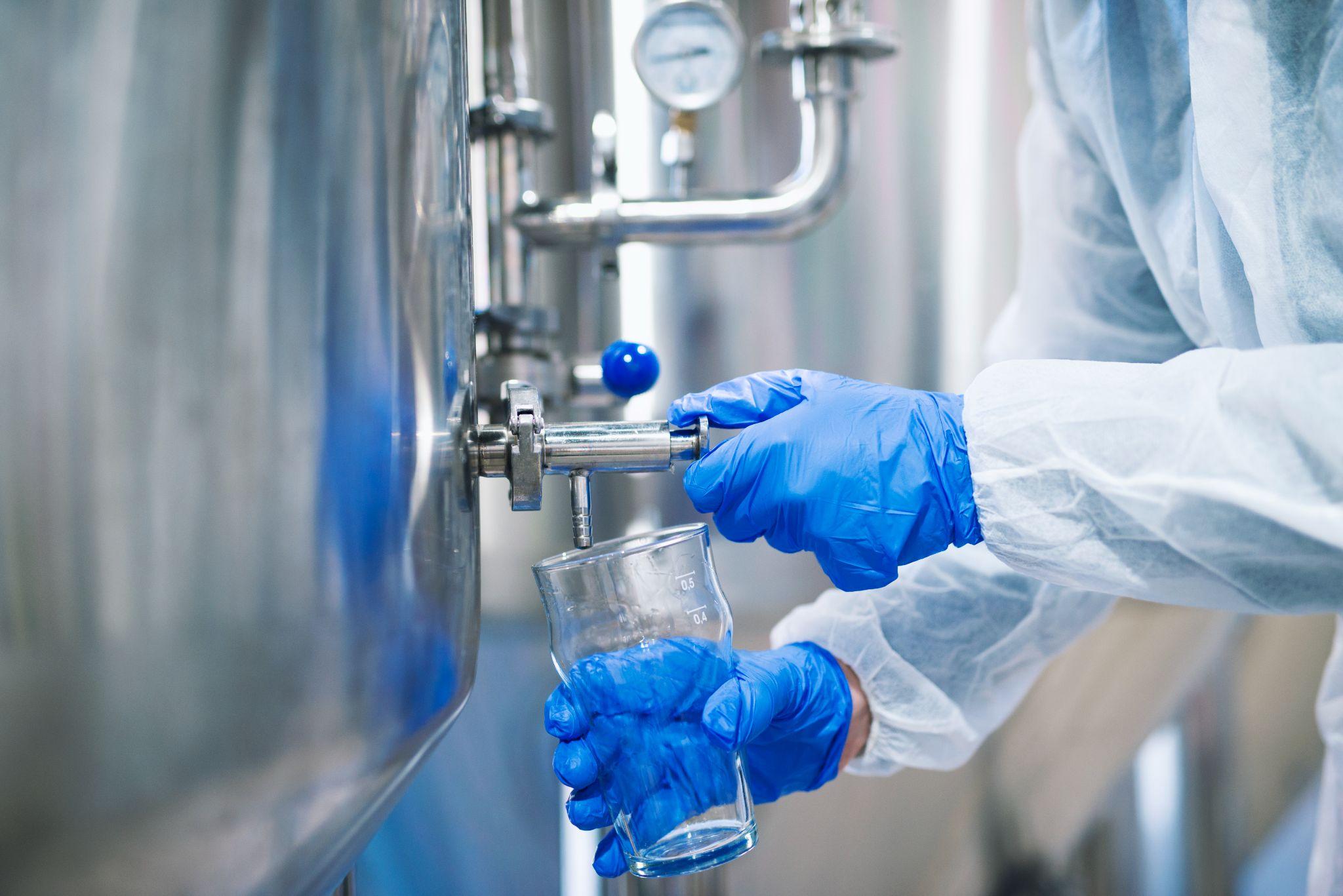
There is a very real pattern witnessed across virtually every industry. Industrial facilities, such as pharmaceutical manufacturing plants, dialysis clinics, food processing plants, and energy generation plants, have suffered from water quality issues, which often remain hidden until they arise at a critical point. For example, a defective product lot, adverse patient reaction or a rejected product run.
As a rule of thumb, most of these facilities initially turn to reverse osmosis as their primary technology for purifying their incoming process water, because it is one of the few technologies capable of removing a wide range of contaminants in a single pass.
How RO Works?
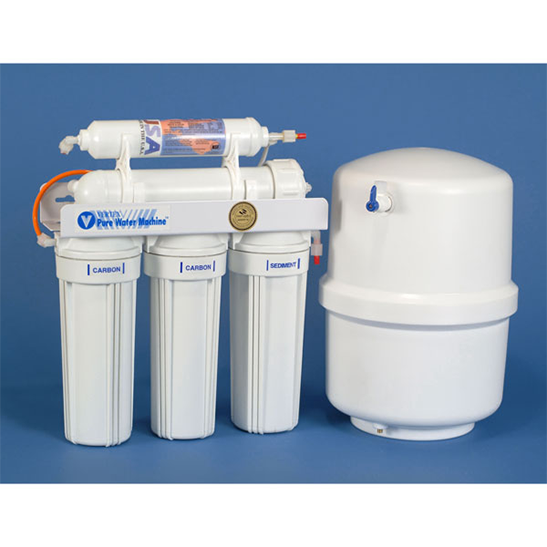
Reverse Osmosis is designed to allow natural osmosis to occur but uses a pump to force water through a porous membrane in the opposite direction from where it would naturally go due to osmosis. A high-pressure pump forces feed water through the membrane, against the osmotic pressure, allowing only water molecules to pass through.
For broader industry context, the Water Quality Association (WQA) describes reverse osmosis as a high-pressure membrane process that separates water from chemical and microbial contaminants.
The RO process will remove 95 – 99% of dissolved salts from water. The ability of the membrane to remove other contaminants (i.e., bacteria, heavy metals, organic compounds, and endotoxins) is limited by the molecular weight of each contaminant. If a contaminant has a molecular weight greater than 200 daltons, it is generally not capable of passing through a properly functioning RO membrane.
Therefore, this means that reverse osmosis will remove dissolved salts, bacteria, and many other contaminants. There are two outputs from the Reverse Osmosis process – permeate (the purified water) and concentrate (the waste or rejected contaminants).
The ratio of permeate to concentrate is known as the recovery rate. Increasing the recovery rate reduces the amount of wastewater produced and creates a higher concentration of contaminants at the membrane surface, thus increasing the fouling pressure on the membrane and decreasing the time between membrane cleanings.
If you’re weighing RO for a new process-water application, Flier’s application engineers can help you review source-water chemistry, flow needs, and downstream purity targets before you specify a system.
What Are The Common Industrial Uses Of RO?
Pharmaceutical Manufacturing
As per the United States Pharmacopoeia Chapter 645, the conductivity of purified water used in the manufacture of pharmaceuticals must be equal to or less than 1.3 microSiemens per centimetre at 25 degrees Centigrade.
Because reverse osmosis does not by itself meet this conductivity requirement, pharmaceutical companies must utilise additional electrical treatment (i.e., electrodeionization) or a mixed-bed deionisation (MBD) process to satisfy the conductivity specification before the water can be supplied to the customer. This is done after the reverse osmosis process has already removed a large portion of the total dissolved solids.
Food and Beverage Production
In brewing, the chemistry of water has a direct impact on both yeast behaviour and the flavour of the final product and should not be treated merely, as doing so can lead to inconsistent products.
Reverse osmosis systems remove a majority of impurities from source water and reduce them to close to zero, creating a reliable starting point for brewers and other food processors to achieve consistent batch-to-batch production.
Hemodialysis
When a patient undergoes a single session of hemodialysis, they are exposed to approximately 120 – 150 litres of water that pass across the dialysis membrane and into the bloodstream.
AAMI/ANSI standard 23500 specifies strict limits for the contamination in dialysis water because there is virtually no margin of physiological safety beyond these limits. Reverse osmosis is the main treatment step in every hemodialysis water treatment system that meets this standard.
Power Generation
Dissolved minerals present in water can settle on the surfaces of heat transfer equipment inside a boiler. This forms a hard layer called scale, which reduces heat transfer efficiency and can damage the system. In addition, silica present in th water can carry over into th steam, lowering performance.
Both of these outcomes typically do not reveal themselves until too late. RO eliminates most dissolved solids from the water before it undergoes further treatment in the ion exchange polishing step (where conductivity is brought to levels needed by high-pressure boilers).
For real-world examples across pharmaceutical, dialysis, manufacturing, and boiler applications, explore Flier’s reverse osmosis case studies.
What Are The Best Maintenance Practices For Reverse Osmosis Systems?
RO systems usually do not fail suddenly. Instead, their performance gradually deteriorates over time. This deterioration is first seen in system indicators like water quality, flow, etc., prior to appearing in the final product water. This is an important distinction for RO maintenance purposes, as these systems need more of a monitoring discipline than a fixed replacement schedule.
Pre-filters
● Pre-filters should generally be replaced every 3 to 6 months, depending on feed water quality. These filters are intended to protect the RO membrane by extracting suspended solids that could otherwise cause early fouling or damage. You should not rely only on a time-based schedule to identify if a pre-filter needs changing. Rather, a differential pressure increase of 10 PSI across the filter is a sign that the pre-filter is clogged and should be replaced irrespective of how long it has been in use.
Mechanical Cleaning
● Mechanical cleaning of RO membranes should be conducted on an annual basis by a trained professional. As time goes on, membranes develop scale, biofilm, and organic fouling on their surfaces. These deposits block water flow, which leads to a decrease in permeate flow and can also allow more contaminants to pass through.
Industrial Reverse Osmosis Membrane Lifespan
● Industrial reverse osmosis membranes last between 3 and 5 years provided they are pre-treated correctly and cleaned annually. Certain factors can shorten the lifespan of a membrane; these include – excessive chlorine exposure, delayed pre-filter replacement and operation above design pressure. If membrane replacement is required within 2 years, it suggests a pre-treatment issue, not poor membrane quality.
Conductivity and Flow Monitoring
● Conductivity of the permeate (treated) water is the primary method to monitor membrane performance. If there is an increase in conductivity, membrane integrity is declining, and contaminants are getting through. A decrease in the flow rate by more than 10 – 15% from baseline level points to fouling. Real-time monitoring allows these parameters to be logged continuously and any deviations from normal operating parameters to be flagged prior to failure.
Seeing rising conductivity, falling permeate flow, or more frequent cleaning? Reach Flier’s at (616) 583-9040 or purewater@fliersinc.com and share what the system is doing.
In The End
Flier’s Quality Water Systems designs, installs, and maintains reverse osmosis systems for commercial and industrial applications, such as food and beverage processing, healthcare facilities, laboratories and manufacturing operations. Each RO system is custom-engineered to meet the unique requirements of each client’s source water and intended use case. To initiate either a specification for a new installation or troubleshoot performance issues related to an existing system, call us at (616) 583-9040.