
The water distribution systems in hospitals are more difficult to disinfect than those in other types of buildings because they contain areas of stagnant water known as dead legs. They may also include storage tanks that hold large volumes of warm water for extended periods – calorifiers, as well as valve types (thermostatic mixing valves) that do not preserve uniform water temperatures throughout the facility.
These can promote the growth of biofilms containing Legionella pneumophila and Pseudomonas aeruginosa, increasing the risk of Legionnaires’ Disease and other opportunistic infections.
This can be particularly hazardous for patients who have compromised immune function due to underlying medical conditions, such as those receiving chemotherapy, who have had an organ transplant, or those with a critical illness. An infection transmitted through water during the patient’s stay in the hospital can be a sentinel event with very significant clinical, regulatory, and institutional consequences. Our UV systems provide proven microbial control at the points where this risk is most concentrated: at the ward level and at the outlet level.
In complex ward plumbing, mains temperature control and residual disinfection lose consistent efficacy where centralized controls fail to deliver stable dosage, particularly in haematology, oncology, ICU, and burns units. Point-of-use UV at the clinical interface (including tap, shower, and ice machines) provides a validated microbial barrier aligned with CDC recommendations.
Infections caused by Stenotrophomonas maltophilia, Mycobacterium chelonae, and non-tuberculous mycobacteria are increasingly recognised as sources of health-associated waterborne infections, especially in patients with severely compromised immune systems or with haematological conditions, who often have limited antimicrobial treatment options. These organisms can remain in hospital distribution pipework, often staying undetected until a clinical incident confirms that they are present. The use of ultraviolet light at the supply pipe can massively reduce and inactivate these.
If your facility is reviewing high-risk outlets or a phased UV rollout, Flier’s application engineers can help you talk through the water-system conditions, flow requirements, and point-of-use priorities.
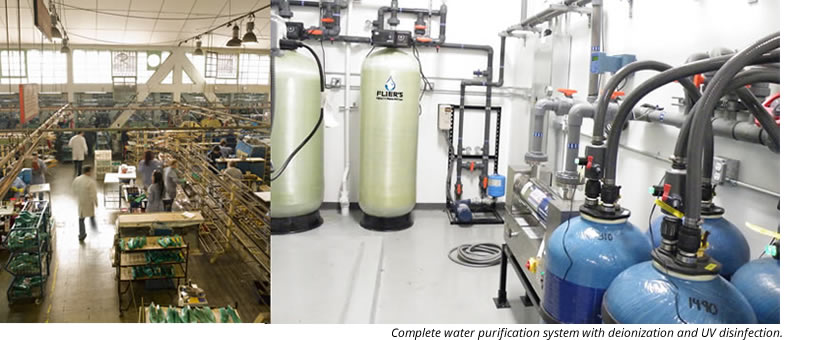
UV is a disinfection measure that works downstream from temperature management, filtration, or any chemical treatment already in place. It adds a terminal control layer without requiring changes to parameters from upstream treatment stages.
Commissioning of a UV system for a hospital includes engineers taking measurements of the intensity of lamp output as it relates to confirmed flow parameters at each installed point. This information is documented against the facility-developed treatment target values and formatted for direct inclusion into the Water Management Plan documentation and into the Infection Control review files. This supports ongoing compliance reporting and scheduled regulatory audits.
When using a risk-stratified approach, hospitals typically prioritize installation based on three factors: clinical severity of the ward, frequency of outlet use, and the documented infection history. For example, the highest-priority outlet installation points are usually located in areas treating patients on active mechanical ventilation.
For a site-specific discussion, reach Flier’s at (616) 583-9040 or purewater@fliersinc.com and share the outlets, flow conditions, or water-management concerns you’re working through.

