
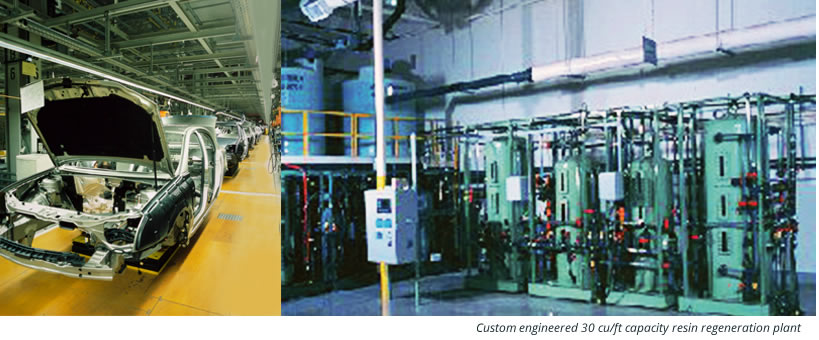
 Manufacturing processes are only as reliable as the feed water used in them. The primary variables affecting product quality include dissolved minerals, silica, organic compounds, and other contaminants present in the source water. These impurities can introduce inconsistencies into production, accelerate wear on industrial equipment, and increase the risk of regulatory non-compliance.
Flier’s reverse osmosis systems for manufacturing are designed, built, and tested to deliver stable, predictable water quality that supports consistent production performance across a wide range of industrial applications.
Water quality can vary significantly from one location to another, even within the same city or region. Production flow requirements also differ between manufacturing lines, while local wastewater discharge regulations introduce additional engineering considerations.
Before specifying any new reverse osmosis system, Flier’s team conducts a comprehensive site evaluation and water analysis. This process helps assess:
Source water quality
Production process requirements
System capacity needs
Local discharge regulations
Available installation space
Based on these findings, our engineers determine the most suitable:
Membrane configuration
Pretreatment equipment
Recovery rates
Operating parameters
The result is a capacity-matched reverse osmosis system for manufacturing that delivers reliable performance with minimal operational adjustments.
Manufacturing industries that depend on high-quality process water benefit significantly from reverse osmosis technology. These include:
Pharmaceutical manufacturing
Electronics production
Automotive manufacturing
Metal finishing facilities
Textile dyeing operations
Food-grade component manufacturing
These industries typically require low total dissolved solids (TDS) to maintain product consistency, process reliability, and applicable quality standards.
Untreated hard water often requires manufacturers to use chemicals such as scale inhibitors, pH adjusters, and descaling agents to reduce mineral buildup in boilers, cooling systems, and production equipment.
Reverse osmosis removes a large percentage of dissolved minerals before the water enters the manufacturing process. By reducing scaling at the source, manufacturers can often lower chemical consumption, reduce maintenance requirements, and decrease labor associated with water treatment systems.
Yes. A properly engineered multi-stream reverse osmosis system can supply different water quality levels from a single integrated installation, including boiler-grade water and higher-purity process water.
At Flier’s Quality Water Systems, each system is engineered according to the production requirements of individual departments. This approach can reduce equipment costs, conserve floor space, and eliminate the need for multiple standalone systems.
Routine preventive maintenance typically includes:
Replacing pre-filter cartridges
Monitoring membrane performance
Performing scheduled membrane cleaning
Flushing the system when required
Inspecting pumps, valves, and instrumentation
Flier’s works with manufacturers to develop maintenance schedules that align with production operations and help minimize unplanned downtime.
Industrial reverse osmosis systems remove a high percentage of dissolved solids and other contaminants from feed water. This creates a clean, consistent water supply that supports repeatable manufacturing processes and reliable batch-to-batch product quality.
By providing stable water chemistry, reverse osmosis systems help manufacturers improve production consistency, protect equipment, and reduce the likelihood of quality-related issues.

