If you are searching for water purification options, many people probably suggest reverse osmosis. And if you have concerns about contaminants, some may recommend using distilled water. But have you ever thought about the difference between reverse osmosis water purification and distilled water?
Both are commonly used water purification methods, but there are substantial differences between them that may have an influence on your choice of home water treatment system.
Here is an overview of both to help you make an informed decision when it comes to choosing a water purification system.
 The Basics of Reverse Osmosis and Distilled Water
Reverse Osmosis
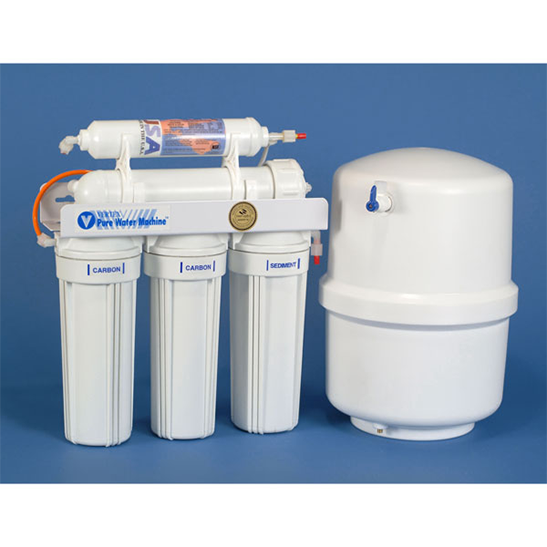
Reverse Osmosis is a water filtration system that has several fine membranes through which water passes. This system may have four or more membranes that remove contaminants and other impurities from your water to the microscopic level. Additionally, it has a mineral filter that adds vital minerals into the drinking water, making it healthy for your consumption. Plus, it also improves the taste of water, making it refreshing and crisp.
Distilled Water or Distillation
Distilled water is generated through a process called distillation. It involves boiling water to the point that it transforms into steam. After boiling, the contaminants and impurities settle at the base of the distillation system while the steam collects in a condenser and cools down. When the temperature of the condenser drops, the condensed water transforms into liquid. Finally, these water droplets pass through carbon filtration, which removes any contaminants or chemicals that might have left in the boiled water. This process gives you highly purified water with a minute amount of dissolved solids.
You can get purified drinking water from both reverse osmosis and distillation, but for residential purposes, only reverse osmosis is a practical choice.
Key Differences at a Glance
|
Feature |
Reverse Osmosis (RO) |
Distilled Water |
|
Purification method |
Multi-stage membrane filtration |
Boiling and condensation |
|
Removes heavy metals |
Yes |
Yes |
|
Removes volatile chemicals |
Yes |
Limited |
|
Adds minerals back |
Yes (with mineral filter) |
No |
|
Taste |
Fresh, crisp |
Flat or bland |
|
Energy use |
Low |
High |
|
Best for daily drinking |
Yes |
Not ideal long-term |
Is the Water We Receive Through Reverse Osmosis Also Distilled?
Now you must be wondering that both processes purify water by removing contaminants and impurities, giving you safe water for drinking or other uses. So, is reverse osmosis water also distilled or vice versa?
The answer is ‘No.’ Although both methods provide safe and clean water by removing solid particles and minerals from the water, distillation doesn’t eliminate volatile chemicals such as chloramines as effectively as reverse osmosis does. Distilled water is only a short-term water purification solution, while reverse osmosis offers a long-term and very effective solution to get purified water.
Common Contaminants and How Each Method Handles Them
When choosing a water purification system, it helps to understand what contaminants are actually being removed and how effectively each method handles them.
Chlorine and Chloramines: Reverse osmosis is more effective. Distillation may remove some chlorine, but chloramines and other volatile chemicals can carry over during the boiling process unless additional filtration is used.
Heavy Metals (Lead, Arsenic, Mercury): Both reverse osmosis and distillation are highly effective. These contaminants are often found in aging pipes or groundwater and can pose serious health risks.
Dissolved Salts and Total Dissolved Solids (TDS): Reverse osmosis excels at reducing dissolved salts and overall TDS, especially in systems designed for continuous use. Distillation also removes dissolved solids, but it is less efficient and more energy-intensive for high-volume or ongoing water needs.
Bacteria and Viruses: Both methods can effectively work. Reverse osmosis systems are especially reliable when paired with UV disinfection or additional filtration stages.
Industries That Commonly Use Reverse Osmosis Water
Reverse osmosis water is widely used across industries where high-water quality, safety, and mineral control matter, but completely mineral-free water is not required.
Healthcare and Wellness
Hospitals, clinics, dialysis centers, and wellness facilities rely on RO water for equipment cleaning, sanitation, and patient use because it removes harmful contaminants while remaining safe for human contact.
Food and Beverage Industry
Restaurants, cafés, bottled water plants, breweries, and food processing units use RO water to maintain consistent taste, prevent scaling in equipment, and meet hygiene standards.
Residential and Hospitality
Homes, hotels, resorts, and apartment complexes prefer RO systems for drinking, cooking, and ice machines because the water is safe, tastes good, and is suitable for daily consumption.
Pharmaceutical and Cosmetic Manufacturing
RO water is commonly used in the early stages of production, cleaning processes, and formulation, where purified water is required but ultra-pure water is not mandatory.
Commercial Laundries and Car Washes
RO water prevents mineral deposits, protects machinery, and improves washing results, making it ideal for commercial cleaning applications.
Industries That Require Distilled Water
Distilled water is typically used in industries where absolute purity and zero mineral content are essential.
Medical and Laboratory Use
Hospitals, laboratories, and research facilities use distilled water for experiments, sterilization, and preparing solutions where minerals could interfere with results.
Pharmaceutical Manufacturing
Distilled water is often required in drug formulation, testing, and quality control processes to ensure chemical stability and accuracy.
Electronics and Semiconductor Manufacturing
Even trace minerals can damage sensitive components. Distilled water is used for cleaning circuit boards, microchips, and electronic parts.
Automotive and Battery Manufacturing
Car batteries, cooling systems, and testing processes require mineral-free water to prevent corrosion and performance issues.
Industrial Equipment and Steam Systems
Distilled water is used in boilers, steam irons, and industrial machinery to avoid scale buildup and extend equipment life.
Which One Is the Better Choice?
While both reverse osmosis and distillation remove impurities and minerals from water, reverse osmosis goes a step further. Its mineral filter restores essential nutrients that are beneficial for the body. With distilled water, those minerals are absent, so a mineral-rich diet becomes necessary to compensate.
Reverse osmosis delivers purified water that is healthier, better tasting, and easier to maintain for long-term use. This makes it a preferred option for everyday consumption.
Need More Help?
Choosing between reverse osmosis, distilled water, or deionized water is about matching the right system to the right application. This is where Flier’s Quality Water Systems plays a key role.
Flier’s engineers build custom commercial water purification systems designed to meet the exact quality standards required by different industries. Instead of offering a one-size-fits-all solution, they evaluate water quality, usage demands, compliance requirements, and operational goals before recommending or designing a system.
If your operation needs safe, high-quality process water, Flier’s can determine whether reverse osmosis alone is sufficient or if distilled, deionized, or hybrid systems are required. Our team conducts no-obligation system analyses to ensure you get the right solution without overengineering or unnecessary cost.